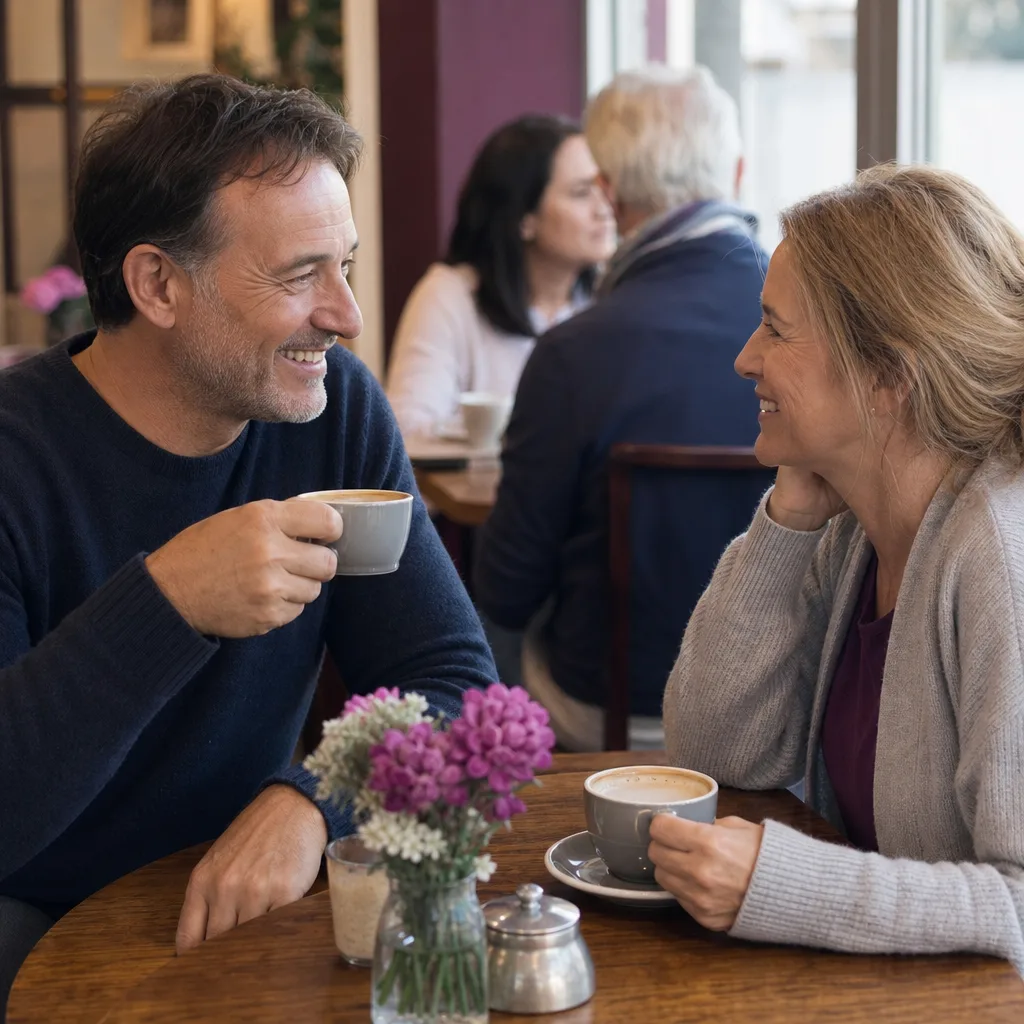
Meet understanding local people at your own pace, without pretending the past did not happen.
The first date is booked, then the doubt arrives. Is this too soon? What will the children think? And how do you explain that loving someone new does not erase the person who died? For many widowers, returning to dating is less like starting over and more like learning to carry two truths at once.
There is no approved timetable. Some people feel ready within months; others need years. Readiness is not measured by whether grief has disappeared, because it may never disappear completely. A better question is whether you can be curious about another person without asking them to fill an empty chair.
How do I know if I am ready to date after losing my partner?
You may be ready when meeting someone feels like an opportunity to know them, rather than a way to escape loneliness or recreate your previous relationship.
Grief is uneven. You can enjoy an evening out and still have a difficult morning afterwards. That does not mean the date was a mistake. In reality, readiness often looks ordinary: you can make plans, tolerate uncertainty and talk about your late partner without every conversation becoming a test of loyalty.
- You have room for another person. You can listen to their story instead of comparing every detail with your marriage.
- You can accept mixed feelings. Excitement, guilt and sadness may appear together. None automatically cancels the others.
- You are making your own choice. Friends or relatives are not pushing you to date, and you are not doing it solely to reassure them.
- You can cope with a polite no. Rejection may sting more sharply during grief, but it should not leave you unable to function.
A new relationship does not replace a late partner. It becomes a different relationship, with its own history and shape.